First-Time EV Owner? Here’s what I wish I knew before my first charge
Published on 4 February, 2026
EV charging, explained for normal people.
Overview
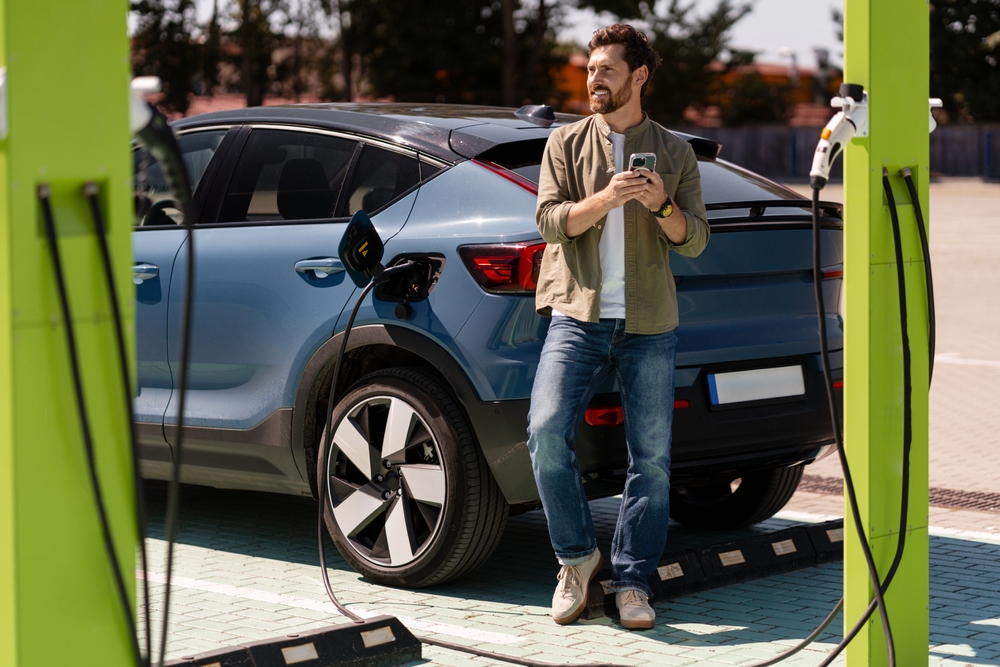
Switching from a combustion-engined car to an EV can feel confusing when you’re used to fuelling up with one simple nozzle. As a first-time owner, you’ll need to know about charge points and ports, kilowatts (kW) and connectors, as well as basic charging etiquette. It can all feel a bit foreign at first but master the basics and you’ll soon be plugging in and charging up with confidence.
Watt Matters
Electric cars use batteries measured in kilowatt-hours (kWh), which indicates the amount of energy the battery stores. Think of it as the size of the fuel tank.
You’ll see AC and DC “peak charging” rates mentioned, and these are the maximum speeds a given car can be charged up at. It’s measured in kW, which is technically power, but you can think of it as the rate at which the battery is recharged. That’s important when you compare chargers - a higher kW rating means faster charging, but only if your car can accept it. Every car has a limit.
EV Charger Types
EV charging comes in three main flavours, each with its own connector and speed. Home and destination charging uses alternating current (AC); rapid and high power charging stations use direct current (DC). In Ireland, home charge points typically deliver up to 7.4kW, public AC chargers up to 22kW, DC chargers from 50kW up to about 400kW at most. These numbers relate directly to how long you’ll be plugged in, again, depending on the capability of your car.
Home Charging (slow/AC)
Most new EV owners start with a home wall box. These typically add about 7kWh of energy each hour. As a rule of thumb, that’s roughly 100km of range in about two hours, depending on the car’s efficiency. Here are a few approximations for reference:
• Small battery (about 45kWh): around 6½-7 hours from flat to fully charged. A 20-80 per cent top-up takes about four hours.
• Medium battery (about 70kWh): around 10 hours from flat to fully charged. A 20-80 per cent top-up takes about six hours.
• Large battery (about 100kWh): around 14-15 hours from flat to fully charged. A 20-80 per cent top-up takes about 8½-9 hours.
Those charging speeds might look slow, but if you plug in overnight on a night-rate tariff, you’ll wake to a fully charged battery and a lower bill than if you charge during the daytime. If your home has three-phase power and an 11kW wallbox, you can cut those times by about a third.
Depending on how much you drive during the week and the type of car, you may only need to charge overnight once or twice a week – or even less frequently.
Home chargers use a ‘Type 2’ connector, which has become the standard across Europe. Older cars may use Type 1, but adapters are available for compatibility. Some EVs are sold with a three-pin “granny” cable, but these are really for emergencies only. Slow charging (it’s 3kW at best) can take well over 24 hours, and as a safety precaution, should never be done via an extension lead.
Destination Charging (fast AC)
Public chargers rated 11kW or 22kW are most often in car parks, supermarkets, hotels and workplaces. They’re ideal when you’ll be parked for a few hours and, depending on the power output, and your car’s onboard charger and efficiency, they'll add 25-100km of range per hour.
In Ireland, these are classed as standard AC chargers and are capped at 22kW. The Type 2 plug is used for slow and fast AC charging. Charging to full at these speeds can take three to eight hours depending on the battery size.
Many 22kW charge posts can charge two cars simultaneously; however, when two vehicles are charging from the one post, the AC charge rate is halved, so you’ll only get around 11kW per car.
Fast Charging (DC)
At a 50kW DC charger, batteries can reach 80 per cent charge in roughly 30-45 minutes. Ultra-rapid chargers rated 150kW-400kW can add up to 400km of range in under 20 minutes - though few cars can accept such high rates, and these chargers are primarily located at motorway service stations.
Rapid charging uses different connectors. The Combined Charging System (CCS) combines a Type 2 AC plug with two larger DC pins and is the dominant connector for rapid and ultra rapid charging in Europe.
CHAdeMO is another DC standard, primarily used by Japanese manufacturers such as older Nissan Leafs; it typically tops out at 50kW and is being phased out. Tesla previously had its own format, but Irish Superchargers (which is the name Tesla gives to its chargers) now offer CCS.
Ireland's EV Charging Providers
ESB eCars is the largest network, offering AC 22kW, DC 50kW and high-power 150kW chargers nationwide. IONITY operates ultra fast hubs (150-350kW). Tesla Superchargers (150-250kW) are mainly reserved for Tesla owners, but some are opening to all EVs.
EasyGo (recently renamed Ezo) partners with local businesses, offering AC and some DC chargers; Applegreen service stations provide 50-200kW units; and Circle K provides 150-300kW hubs. You’ll sometimes need an RFID card or a phone app to activate a charger and be aware that not all chargers offer contactless card payment.
If you are on a budget, keep in mind that home charging during off-peak hours is significantly cheaper than using public chargers. Some providers of public charging enforce overstay fees, typically after 45 minutes for DC charging and around ten hours for AC charging. So, plan accordingly and avoid leaving your car charging for too long. Which leads us to...
Charging Etiquette
Like many things in life, there are unwritten rules at an EV charging station. These aren’t just niceties - they keep the queues moving and prevent “charge rage” (yes, it's a thing).
Park at the correct plug. Don’t pull into a DC charger if your car only takes AC; that’s like blocking a diesel pump with a petrol car.
Don’t skip the queue. If drivers are waiting, take your turn. In busy charging hubs, queueing may be informal - look for cars pulled off to the side.
A charging bay is not a resting place. Move your car once it’s charged. Leaving your car plugged in all day could really inconvenience another driver.
Don’t unplug others; it's like grabbing the petrol nozzle out of someone’s hands mid fill.
Be considerate to other EV owners and share helpful information on apps like PlugShare about broken chargers or long queues.
Your EV sets the speed. A charger can’t deliver power faster than your car can accept. If your vehicle tops out at 100kW, a 350kW charger will still only charge at up to 100kW, so don’t hog a faster charger than you can make use of.
The 80 Per Cent Rule
Batteries charge quickly up to 80 per cent, then slow dramatically. Unless you need the extra range, stop charging at 80 per cent. Your battery will thank you as regular, fast charging to 100 per cent can reduce long-term battery health compared to mostly charging at home. View rapid chargers as a convenience rather than a daily habit. Use destination chargers when you’ll be parked for a while (like at a shopping centre) and top up slowly; this helps maintain battery health and costs less.
Watt’s More
Know the location of your car’s charging port. This may seem obvious, but pulling up to a charger on the wrong side can result in cables that are too short, causing frustration and embarrassment.
Carry a charging cable and adapter. While DC chargers have tethered cables, many AC units require you to bring your own. Keeping an adapter from Type 2 to Type 1 is essential if you drive an older EV.
Prepare for the weather. Cold temperatures reduce battery range and slow charging. Factor this into your trip planning, and pre heat or pre cool the cabin while still plugged in to preserve battery energy.

Latest Reviews
Like what you see?

Connect With Us


Our Mobile App