Peugeot shows what the future will be like as it plans its new EV ‘family’
Published on 11 January, 2023
Peugeot is going to be busy for a long time by the look of things. It is promising to roll out as many as five new electric versions of current models in just two years – up to 2025.
But the real fun looks like starting after that, when Peugeot begins introducing a new ‘family’ of what it calls ‘BEV-native’ cars from 2025.
The five new models coming in the next two years will be based on vehicles currently on the market. That in itself is quite an undertaking.
Overview
Peugeot is going to be busy for a long time by the look of things. It is promising to roll out as many as five new electric versions of current models in just two years – up to 2025.
But the real fun looks like starting after that, when Peugeot begins introducing a new ‘family’ of what it calls ‘BEV-native’ cars from 2025.
The five new models coming in the next two years will be based on vehicles currently on the market. That in itself is quite an undertaking.
After that – from 2025/2026 – we should begin to see the first arrivals of the dramatically styled and conceived new selection, according to Peugeot executives.
And ‘new’ is the word.
They claim to have completely re-thought what an electric car of the medium-term future will/should look like inside and out.
Why we need to push hard for a better EV charging structure
Mazda takes the latest rotary engine into the MX-30 crossover
Can a new car already be deemed ‘a future legend’? Mercedes seems to think so
It is early days and no doubt there will be spates of updating and ‘teasers’. But judging from what has transpired thus far, this has the feel of something really big coming our way in what is really quite a short timespan.
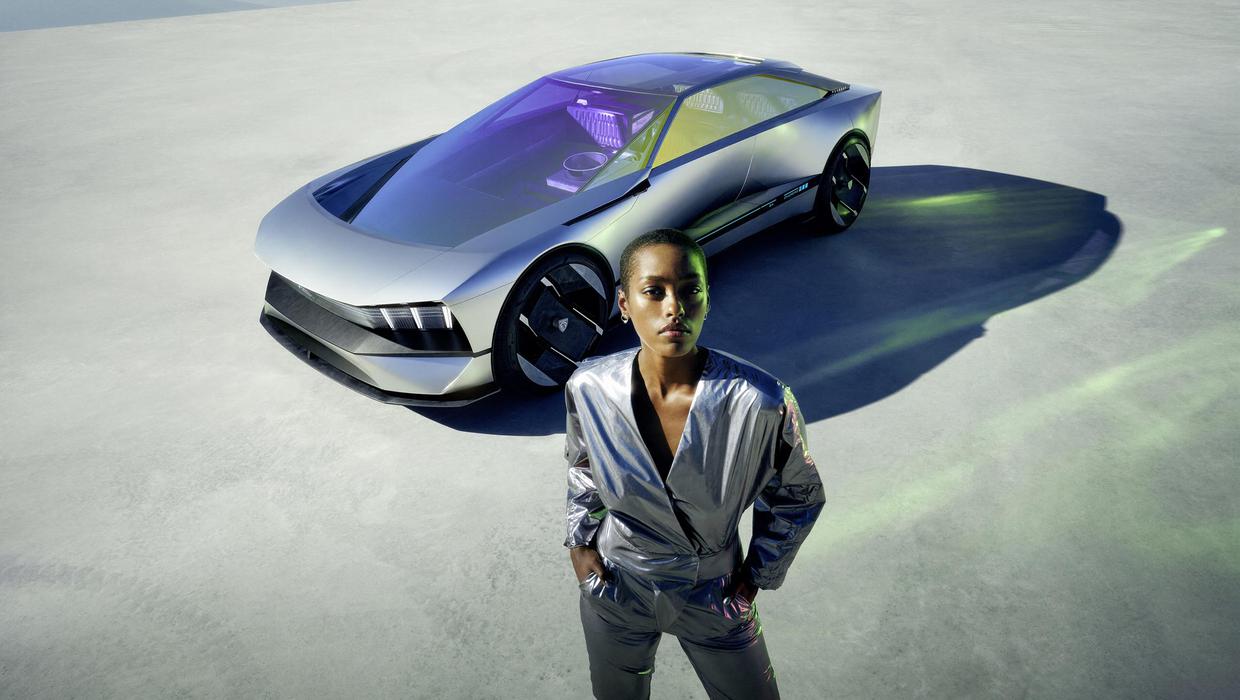
The totally fresh take on things was more than hinted at by the Inception concept car unveiled last weekend in the United States.
It embodies a total reassessment of interior layout, exterior design and performance. It is the springboard for the future of the brand’s cars.
According to senior executives the first Inception-inspired production vehicle is likely to be shown in 2025 and go on sale in 2026.
Some of the things we now know about include a completely redesigned interior space and a radical upscale of the new generation i-Cockpit.
The cars will be built on a range of new STLA platforms. Execs call them ‘BEV-by-design’ platforms and say the whole new approach is the “basis for a revolution”.
The concept is designed on one of the four future Stellantis groups ‘BEV-by-design’ platforms (the Stellantis group includes Citroen, Fiat, Opel, etc).
Obviously in this day and age the platforms are specifically created for electrification. And due to the design of the Concept shown in the US, Peugeot has provided major scope for the designers to completely reshape things, especially the cabin.
They claim to have created a new driving posture and a new on-board ‘experience’ for passengers.
The ‘native’ electric platforms will also introduce technological modules powered by artificial intelligence.
They are called (I kid you not) STLA Brain, STLA SmartCockpit and STLA Autodrive.
The concept has 800-volt technology.
The 100kWh battery means it can cover 800km between charges. The battery can charge the equivalent of 30km in one minute, or 150km in five minutes.
With two electric motors, one at the front, the other at the rear, the concept is, de facto, a four-wheel drive machine.
The designers have gone for a completely new architecture for the i-Cockpit – an element highly prized by buyers up to now. They’ve removed the steering wheel and the switchgears.
They say the new Hypersquare control system means the system is more responsive.
Peugeot adds: “The ultimate ergonomics of the Hypersquare, which replaces the classic steering wheel, creates a new, natural, simpler and safer way of driving. New movements for new driving pleasures, providing an unequalled comfort in driving.”
Why we need to push hard for a better EV charging structure
Mazda takes the latest rotary engine into the MX-30 crossover
Can a new car already be deemed ‘a future legend’? Mercedes seems to think so
Interior Gallery

Latest Reviews
Like what you see?

Connect With Us


Our Mobile App