Tough call on new Peugeot 3008: Is it diesel or plug-in?
Published on 26 March, 2022
A good old facelift is a great way of not just sprucing up a car’s looks but it’s good for levering in latest technology too. Such is the cut-throat nature of the car business that if you don’t keep bang up-to-date you’ll be left behind and quickly forgotten.
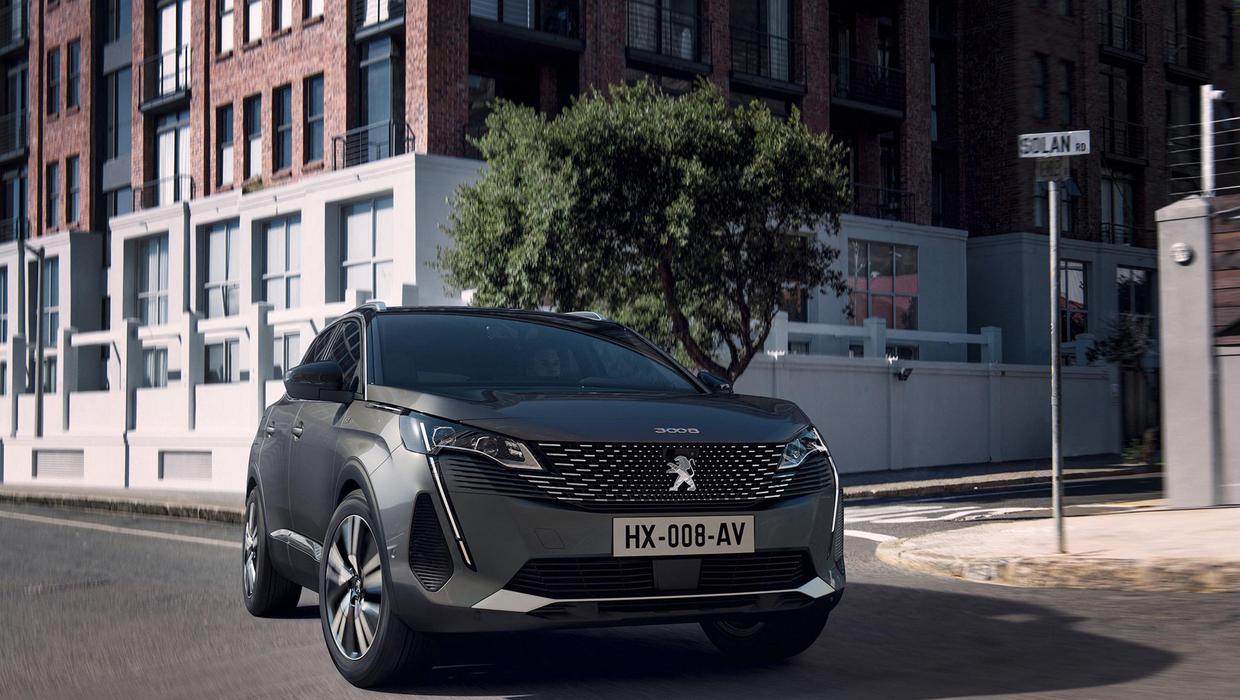
So Peugeot have updated their 3008 SUV on several fronts. And that includes the plug-in-hybrid version I had on test.
Overview
A good old facelift is a great way of not just sprucing up a car’s looks but it’s good for levering in latest technology too. Such is the cut-throat nature of the car business that if you don’t keep bang up-to-date you’ll be left behind and quickly forgotten.
So Peugeot have updated their 3008 SUV on several fronts. And that includes the plug-in-hybrid version I had on test.
One of the most important elements is the arrival in the car of the latest i-Cockpit interior. Whatever faults the 3008 might have – and it has some – the i-Cockpit is a shining example of flair and finish.
As you know, the small steering wheel is part of a thoroughly accessible collection of data, displays and driver aids. Because of its size and shape, you can see all the relevant information on the display right in front of you – at a glance. It keeps you from peering and, consequently, keeps eyes-off-the-road time to a minimum. That’s a big safety plus.
It’s such a simple concept that I’m wondering why more makers don’t use it or something like it.
That cockpit of keys, buttons and screens is vital to the interior of the car as it sets the tone for a roomy cabin with an emphasis on good materials and plenty of spec. That was very much the case with the GT trim I had on test anyway.
I enjoyed my drives in this; it was quiet and well mannered for the most part. However, it wasn’t great by any means at numbing the thumps and bumps on some of the poorer roads around the country and city.
It looks well; it was never dowdy but a bit of a facelift rarely goes astray and sharper lines work well on it.
Important too that yoking up to a public charging point with one of the PHEV versions was so simple and straightforward. A matter of seconds. We plugged in and left it recharging without fuss – that’s how it should always be.
On one drive from Glasnevin to Cabinteely it didn’t use the petrol engine at all. That’s the positive side of PHEVs.
I was driving the HYBRID 225 version which is front-wheel-drive. It develops a combined 225hp (180hp from the PureTech petrol engine and an 110hp electric motor).
The 13.2 kWh battery has, they claim, an electric range of 50km-60km. Judging by my driving and experience of re-charge I’d say 40/45km would be a more accurate range but that isn’t bad as far as I’m concerned.
It is what these cars are designed to do: give you commuting power on the battery only and have the engine kick in when that diminishes and for longer drives.
If you want to spend a bit extra on a more powerful version there is the 3008 HYBRID4 300 (four-wheel-drive, 300hp). It combines a 200hp PureTech petrol engine and two 110hp electric motors. They claim the 13.2 kWh battery provides an electric-only range of 59km. That sounds like a lot. I wonder if I had it to test would all that power not tempt me to drive faster. Electric power allows cars like these to accelerate sharply. But as you do so you’ll notice “charge remaining” nose dive. Hence my doubts about 59km. No, I’ll stick with the less powerful version. It’s more in tune with what PHEVs are supposed to be about.
Inevitably comparisons with a diesel counterpart arose in the course of what was quite a lengthy series of drives.
It’s probably worth noting that, in terms of price there is not much of a difference between the power sources.
Take the 3008 Allure spec as a comparative starting point. To move from a 1.5 BlueHDi 130bhp diesel auto to the HYBRID2 PHEV 225bhp would cost you just €345 extra (only a few tankfuls of diesel in the difference). I mention it because a lot of people, frightened (unnecessarily in many cases) by the prospect of being “stuck” with a diesel, will take a close look at the PHEV and say at least it puts them on the path of electrification.
I would find it hard to say what I’d do. Peugeot’s diesels are renowned and there will be a secondhand market for years and years to come. But this PHEV impressed in many ways though it was not as good a handler as I expected. I think the big battery might be partly to blame.
One thing PHEVs often reduce is boot space (to accommodate the battery). There is no such penalty with the 3008 PHEV. It and the diesel and petrol versions all have 520 litres capacity.
So would I buy it over a diesel version?
Yes, I think on balance I probably would even though I retain a word of caution and criticism against PHEVs because you are carrying a bigger battery around with you when the charge has left. OK PHEV it is. By a whisker.
Factfile
Peugeot 3008 GT plug-in hybrid SUV, (225bhp): €45,770 (excluding dealer delivery, related charges); 3008 PHEV range starts at €43,200.
There’s a sweep of safety and comfort technologies such as extended road sign recognition, traffic flow assist (Drive Assist Plus Pack, adaptive stop/go cruise control, lane keeping with detection of roadside markings), onyx digital instrument panel, 220v socket – 2 sockets (row 2), full LED headlights with static corner lighting.
Interior Gallery

Latest Reviews
Like what you see?

Connect With Us


Our Mobile App