Why you can plug in to this Merc for €140-a-year tax
Published on 2 October, 2021
Mercedes are certainly playing the plug-in hybrid game at full tilt these days.
They have a huge number of such models on the market now. And I’ve tested quite a few of them as you, if a regular reader, would have surmised over the past few months.
I counted 16 as of this week; there could be more by the time you read this. They range from the A-Class hatchback petrol PHEV, to the CLA Coupé petrol plug-in, to the E-Class saloon diesel PHEV to the GLE Coupé diesel plug-in.
Overview
Mercedes are certainly playing the plug-in hybrid game at full tilt these days.
They have a huge number of such models on the market now. And I’ve tested quite a few of them as you, if a regular reader, would have surmised over the past few months.
I counted 16 as of this week; there could be more by the time you read this. They range from the A-Class hatchback petrol PHEV, to the CLA Coupé petrol plug-in, to the E-Class saloon diesel PHEV to the GLE Coupé diesel plug-in.
How the whole electrification game will pan out on plug-ins is anyone’s guess given the fluid state of play in the lead-up to the Budget. There have been murmurings, to put it lightly, against plug-ins across Europe generally. Yes, it’s the same old argument with which I will test your patience by running it by you one more time.
Plug-ins (PHEVs) mean you can charge a special battery when stationary and benefit from around 50km (some manufacturers claim a lot more) solely driven by electric power before reverting to normal hybrid mode where engine, battery and motor combine to optimum effect.
But there are many critics who claim that the technology is not being nearly used enough by many owners. In other words they are not charging up regularly. As a result, they say, the official, as opposed to real-world consumption figures are far apart. Yet taxation policies have tended to favour them.
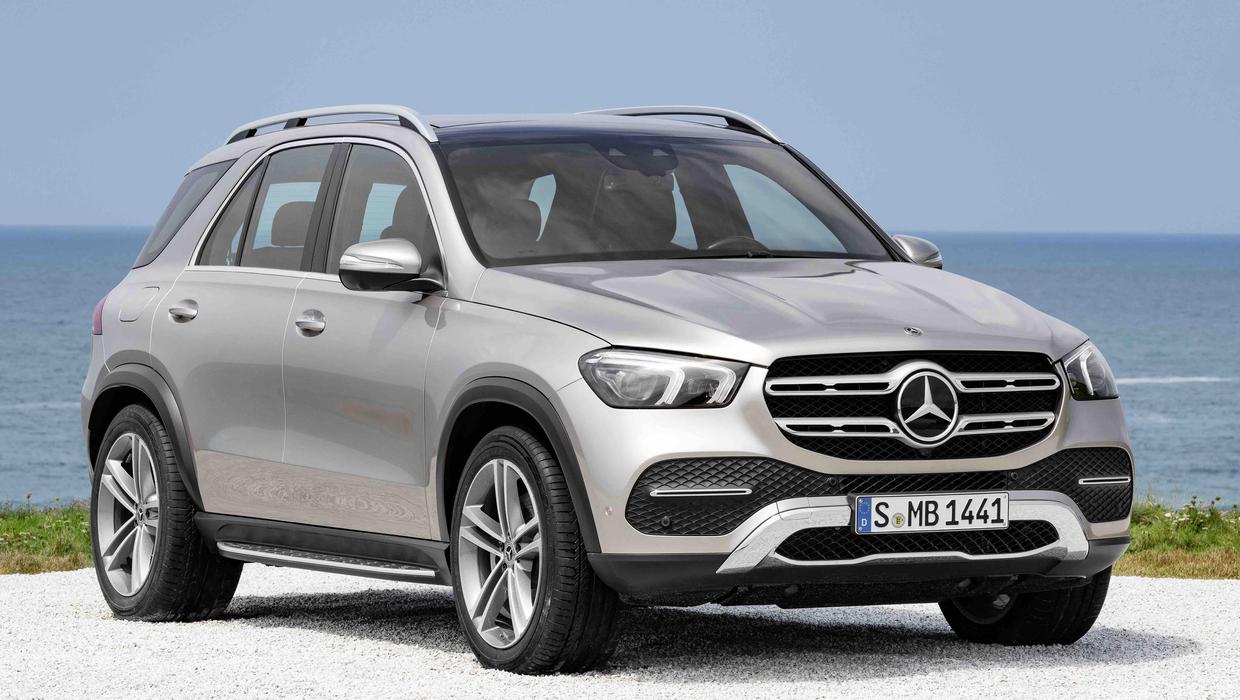
The car reviewed this week is the large all-wheel drive SUV called the GLE – one of the 16 Mercs just alluded to. I think it is more interesting than most in that it is a diesel PHEV. There are not too many of them.
The ironic thing about it, I found, was that its official combined fuel consumption figures are higher than what I achieved over lengthy drives – and without charging up after an initial ‘fill’.
Mercedes claim the car uses seven litres every 100km. I got lower than that (6.7 litres/100km) on a lovely drive to Belfast and, later, to the midlands. And even lower still on a compendium of shorter runs around town (5.6 litres/100km). I assure you I wasn’t sparing the horses. I drove as I normally do; what is the point in doing otherwise? Trying to show off how economically I drive?
The truly remarkable figure, however, is the 19g of CO2 the car is claimed to emit every kilometre. Such a low amount is due in part to the plug-in and hybrid systems at play and attributable in some measure to diesel being a lower emitter of CO2 than petrol (it is the higher NOx emissions that give it a bad name).
But whatever way you look at it, the official figures put this car in the €140-a-year road tax category. For a car worth €95,000 that is an unbelievable outcome. Is it for real? Yes, the road tax on this huge SUV is lower than many a small €20,000 supermini. That’s the way things are. As of now.
Yet for all its frugality and low road tax there is a price to pay for this PHEV version of the large GLE. The plug-in battery pack and other additions on board mean there is no room for a third row of seats.
So, it remains a five-seater. That is a big penalty to pay for the privilege of having a PHEV Non-plug-in GLE versions are available with a third row of two seats.
And the absence of a third row begs a couple of obvious questions. Why bother with a plug-in and lose competitiveness against rivals such as the Volvo XC90? Whatever about well-to-do couples, surely families would lose out on having the option of two more seats. They might not use them that often but, a bit like putting a few euro away for the rainy day, they can be reassuringly available.
All the more so since this is one large SUV, inside and out. I needed all the parking aid I could get a few times. We had such wonderful room in it – with rear leg space particularly notable.
The cabin is modern classic Mercedes with its huge twin screens and infotainment system the focal points. Big roomy seats and leather upholstery are taken for granted when you look at the price of the car.
What may surprise you a little is the power and acceleration for such a large motor. Sure you would expect over 300hp, but 0-100kmh in 6.8 seconds is an achievement. I had to use its pick-up ability (torque) a few times to get out of potential trouble and the response was decent though there have been criticisms of the nine-speed automatic transmission response time.
So, after all that, would I buy it? Yes, it is quite a car on the road and I like the idea. No, if I had a young family. I’d plump for the seven-seater diesel. But either way it is a hugely impressive piece of work.
Interior Gallery

Latest Reviews
Like what you see?

Connect With Us


Our Mobile App