A decade of Dacia: How the Duster changed the landscape for Irish buyers
Published on 3 December, 2022
Overview
IT IS hard to believe the Dacia Duster has been on sale for 10 years here.
I remember its launch so well. We drove left-hand-drive introductory models around during a sunny day out in Co Wicklow.
The fact that you could buy a new car for the price of a good-secondhand model created a wave of publicity in an Ireland suffering the depths of recession. It was all about price. At €14,990 it was €8,000 cheaper than a Nissan Qashqai.
It was a perfect time to launch a bargain basement motor. Sales began with 1,000 in its first year.
There were four airbags, Bluetooth and just 3-star NCAP ratings. People didn’t mind.
Now 10 years on, 16,000 new Dusters – updates and brand new models dot the 10 years – have been bought. Around 30,000 new Dacias have been purchased in that time. The range now includes the like of the Sandero and more recently the Jogger 7-seater MPV.
Fears that we would stop buying bargain-basement motors with the return of so-called prosperity were groundless. Far from it. Prosperity isn’t enjoyed by everyone, hence the demand for price and value.
There has been a constant in how a Dacia is perceived. It’s still low-cost but as it becomes better equipped it is seen as being better value than rivals. One ploy has been to make entry-level cars as cheap as possible and allow you to decide what extras to pay for.
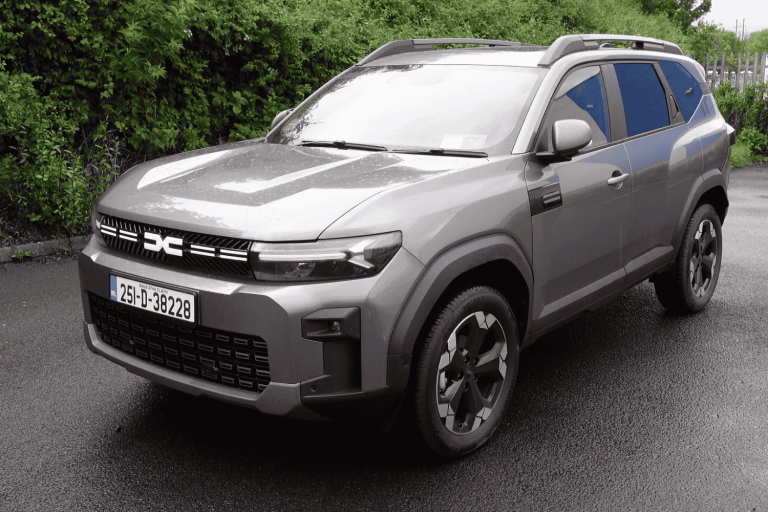
Dacia is now a mainstream volume brand in Ireland with new branding to mark its modernisation. The next 10 are already taking shape. There’s a Bigster large SUV coming, as well as a hybrid Jogger and a Spring electric vehicle.
Latest Reviews
Like what you see?

Connect With Us


Our Mobile App