Van Review: Peugeot Partner
Published on 17 September, 2026
Our comprehensive guide to the Peugeot Partner.
Highlights
Overview
Here’s our rundown on the Peugeot Partner, the smallest dedicated commercial vehicle the French firm makes and one of the top-selling vans in its market sector.
The Peugeot Partner is the most-compact panel van the company produces – discounting the car-based CVs, such as the 208 Van and 2008 SUV Van. As Peugeot is part of the massive Stellantis conglomerate, this same van is sold as the Citroen Berlingo, Opel Combo and Toyota Proace, although the Partner itself has been around since 1996 – it’s now into its third generation as the Peugeot panel van.
If you want a civilian, people-carrying analogue to the Partner, look no further than the Peugeot Rifter MPV, which is a variant of the Partner with more windows and multiple rows of seats. Rivals for the CV version, however, include the Volkswagen Caddy, Renault Kangoo and Ford Transit Connect.
There are three powertrains (two diesel, one electric), three body styles and three trim levels available for the Peugeot Partner and using various combinations of each then there are 16 disparate variants of the van available.
Interior Gallery
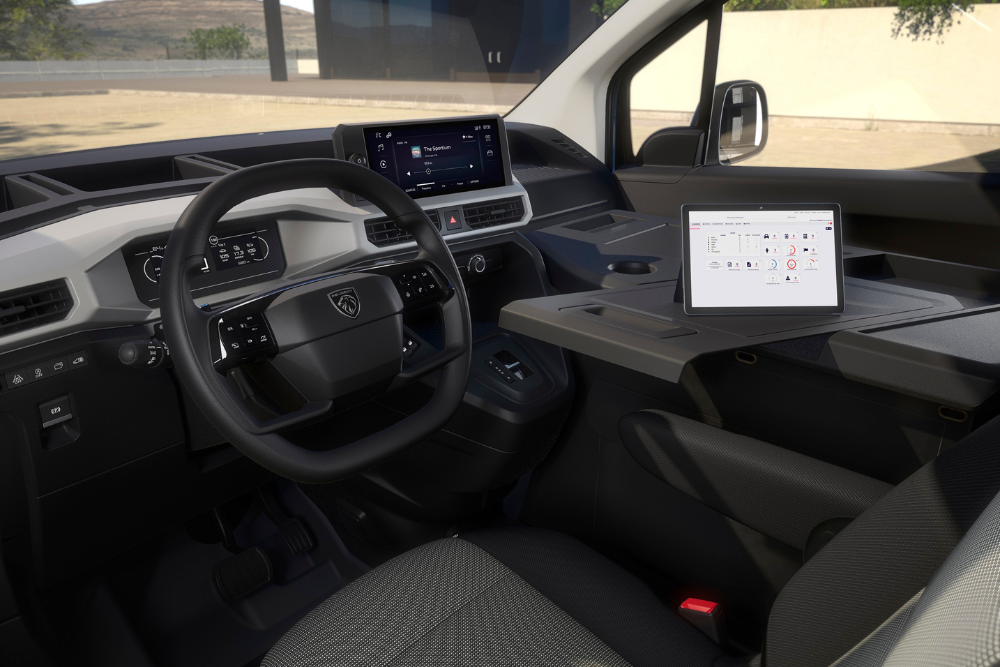
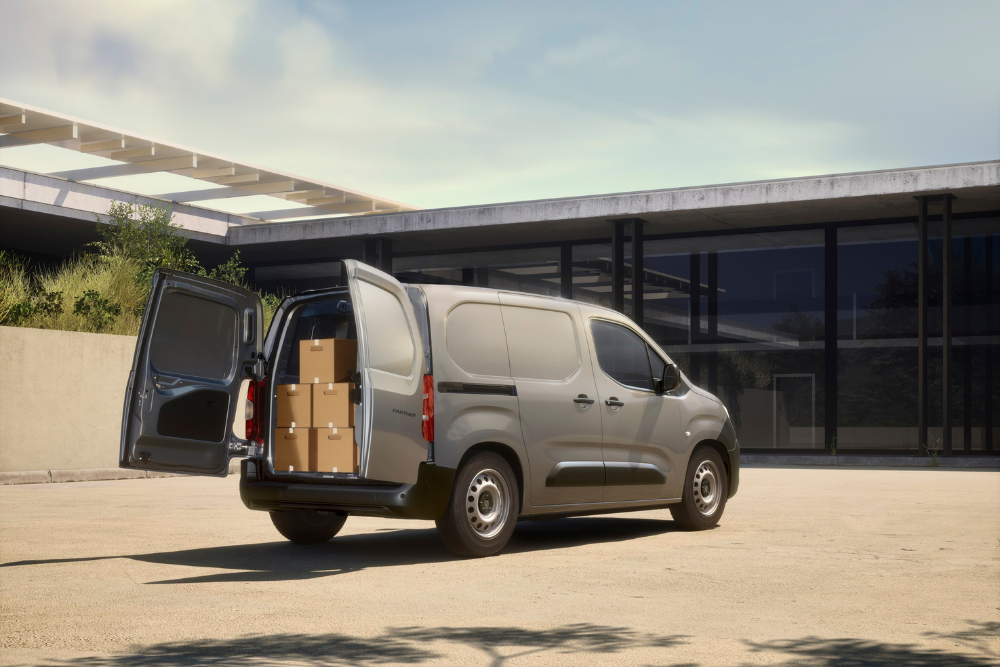
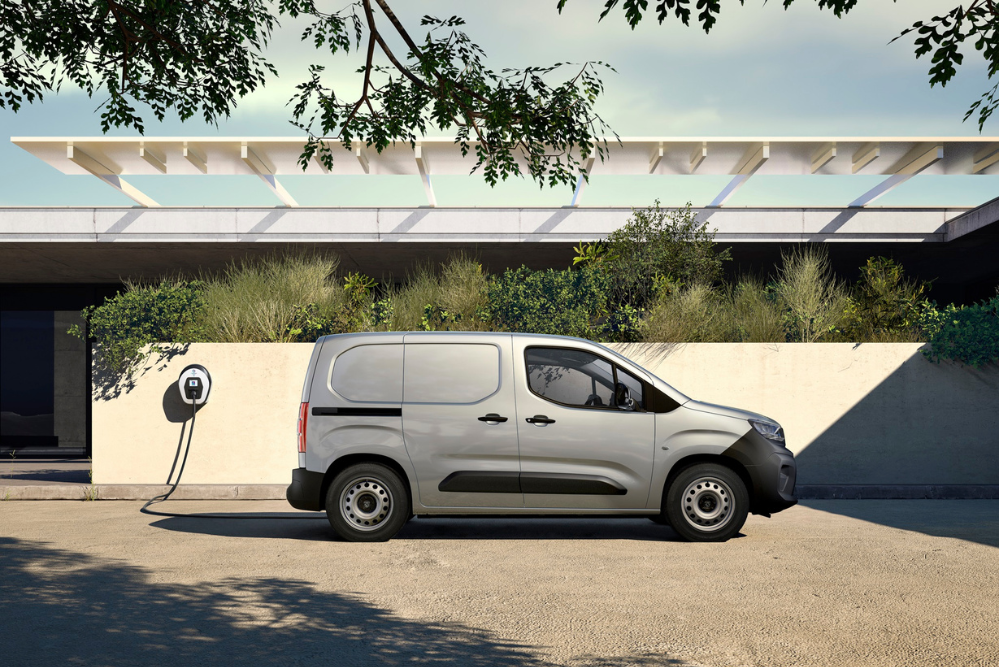
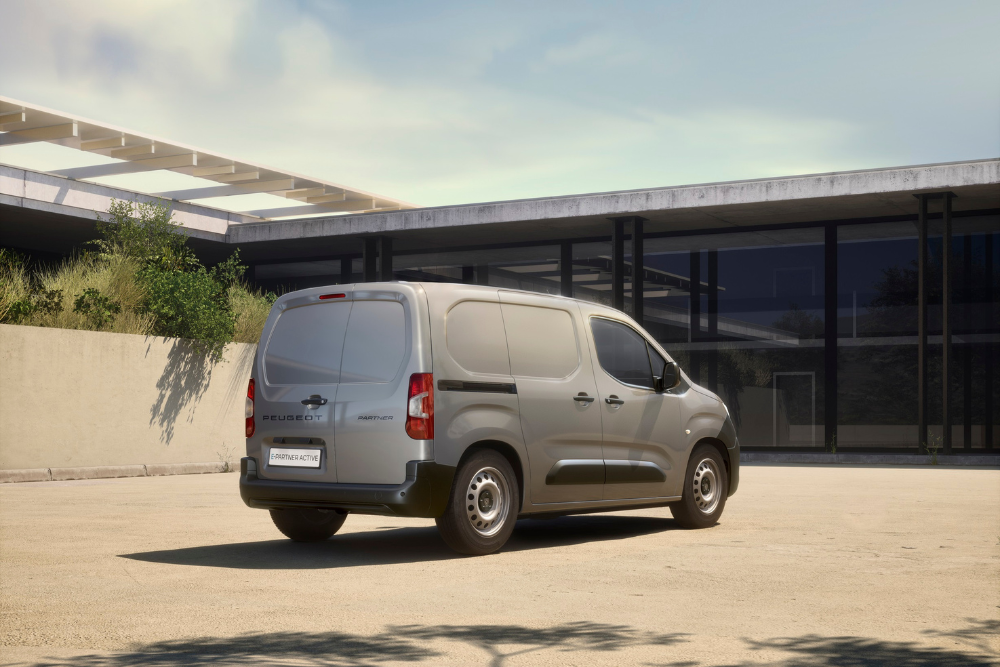
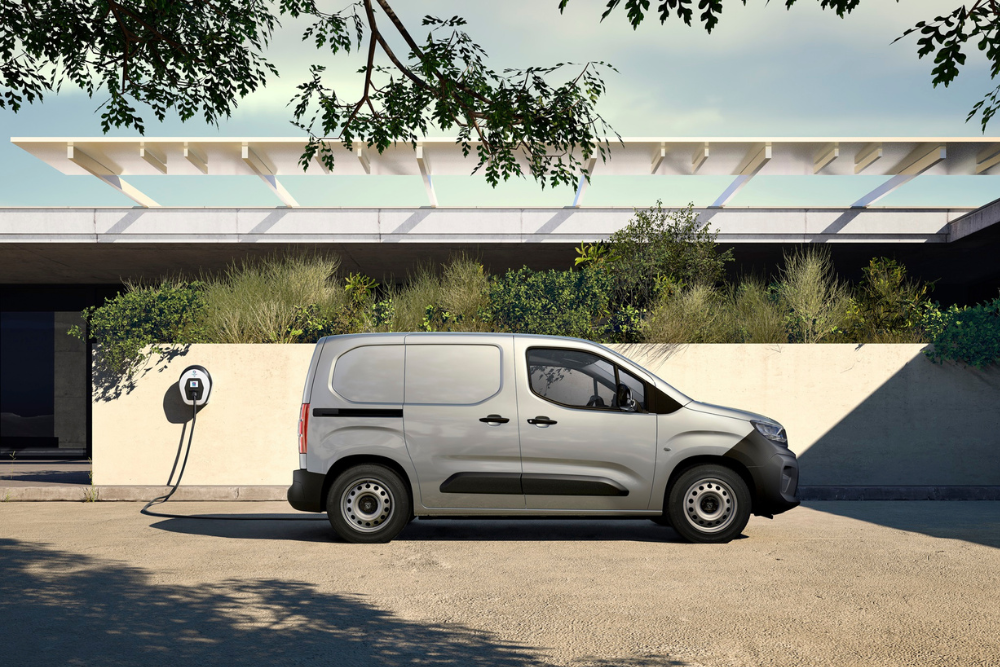
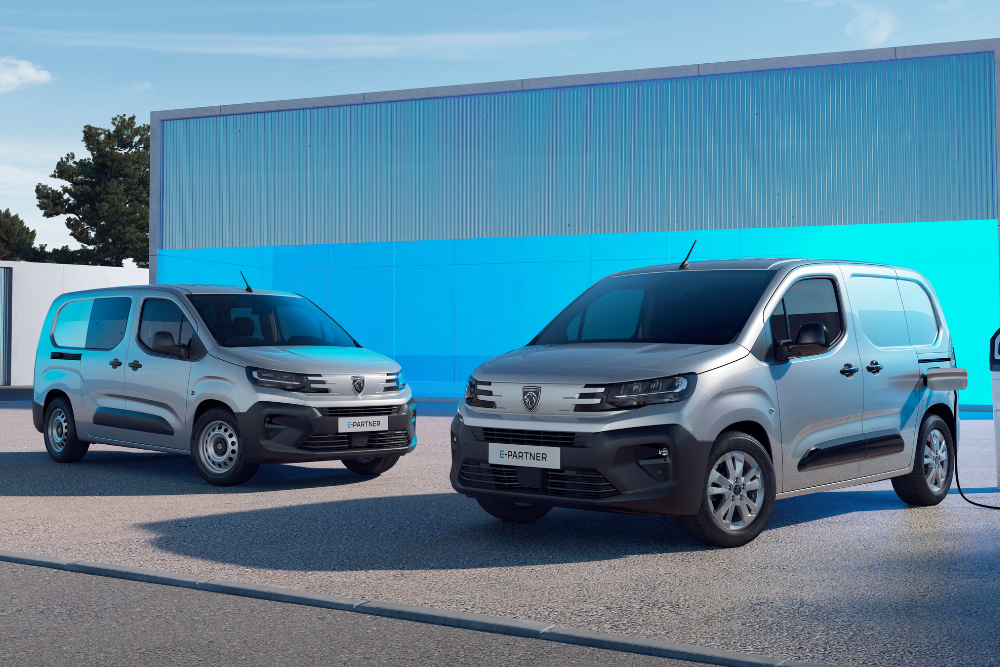
The body styles are L1 panel van, L2 panel van and then Crew Cab, which is the same dimensionally as an L2. While the width (1,848mm excluding door mirrors, 2,107mm including them) and height (1,860mm) are identical on all three, the regular L1 panel van is 4,403mm long with a 2,785mm wheelbase, while the L2 and the Crew Cab are 4,753mm long and have a 2,975mm wheelbase plus a slightly longer rear overhang (886mm, as opposed to 726mm on the L1).
This also means a greater load volume in the L2 panel van (4.4m3) than in the L1 (3.8m3) – enabled by the fact there are slightly different load heights despite the same roofline, at 1,200mm for the L1 and 1,270mm for the L2 – but maximum payloads depend on the engine and vary by body type. The BlueHDi100 L1, for instance, can be specified with either a 650- or 1,000kg maximum payload, while the L2 with either diesel engine takes the full tonne. The Crew Cab, meanwhile, with its 1.8m3 load volume behind two rows of seats (five in total – there are three seats in the cabs of the panel vans), can take an 840kg payload with the BlueHDi100 engine or 642kg as the BEV.
If you want the BEV as a panel van, it is available in both L1 and L2 specifications like the diesel and has the same respective load volumes by cubic metres, but the maximum payload is 850kg on either variant. On all panel van models, the maximum load length – using the load-through bulkhead in the cab – is 3,090mm for the L1 and 3,440mm for the L2. With all cab seats in use, these figures reduce to 1,817- and 2,167mm accordingly, and the load lengths at mid-height are 1,525mm (L1) and 1,875mm (L2). Between the wheelarches is a load width of 1,229mm on all models, while the maximum load width with one sliding load door (SLD) on the side of the panel van is 1,630mm – for two SLDs, this drops to 1,527mm.
All Peugeot Partners come with at least two conventionally opening side doors for the cab area, two side-hinged, 180-degree and asymmetrical ‘barn’ doors at the back, and then one SLD on the left-hand side of the cargo area. Opting for L2 specification (including the Crew Cab) brings a second SLD on the right.
The trim levels available for the Partner family are Active, Professional Plus and Professional Premium – but only at the middle grade of these are all three powertrains available. For both Active and Professional Premium specifications, only the BlueHDi100 can be specified. If you want a Crew Cab Partner (diesel or electric), or a BEV panel van, you must go for Professional Plus trim.
Active versions of the Peugeot Partner come with a six-way-adjustable driver’s seat, a reach-and-rake steering column, an electric parking brake, manual air conditioning, a ‘Moduwork’ folding passenger bench with multipurpose centre seat, the 10-inch Peugeot i-Connect infotainment system with Android Auto and Apple CarPlay support, a 10-inch digital instrument cluster, remote central deadlocking, electric front windows, electrically adjustable and heated door mirrors, cruise control with a speed limiter, rear parking sensors, high-beam assist, a tyre-pressure monitoring system, six advanced driver assistance safety systems, steel wheels with half-hubcaps (15-inch items on L1 and 16s for L2), Eco-LED headlamps with daytime running lights (diesel models only) and various cab-related features such as a 12-volt socket, an overhead storage shelf and either hard plastic floor protection (diesel models) or a carpeted floor (BEV). There are two USB sockets in all versions.
Stepping up to a Professional Plus model, a spare wheel, a volumetric and perimetric alarm, both deadlocking and a polyurethane protection system for the cargo area, Peugeot Connect with eCall and bCall assistance, and the 180-degree VisioPark camera system are all added, although the last item here is not available on the Crew Cab. That body style, however, does gain a five-seat configuration, four-way adjustment for the passenger seat with storage at the rear, a two-position moveable ladder-frame bulkhead, the HD version of Peugeot i-Connect, and fully integrated satellite navigation.
The grandest Professional Premium panel vans, for which the BlueHDi 100 manual is the only powertrain available, also come with dynamic surround view 360-degree cameras, a digital rear-view mirror with side view, blind spot detection, front parking sensors, Flankguard (detection of fixed obstacles), front foglamps, automatic windscreen wipers, electrically folding door mirrors, a body-coloured rear bumper and SLD rails, black-painted door handles, 16-inch steel wheels with full wheel trims and gloss-black door-mirror covers.
All diesel models use a turbocharged 1.5-litre four-cylinder engine. This either develops 102hp/250Nm as the BlueHDi 100, where it is allied exclusively to a six-speed manual gearbox, or there’s a higher-output BlueHDi 130 (131hp/300Nm), which comes with an eight-speed automatic only.
Alternatively, you can choose the BEV (battery electric vehicle), which has a 100kW electric motor and a 50kWh battery pack, allowing for a quoted 330km of driving range. The peak outputs here are 136hp/260Nm, with peak charging speeds of 11kW on AC and 100kW on DC. Expect a 10-80 per cent battery top-up to take half an hour at its fastest, or a 10-100 per cent charging cycle on a 7.4kW AC wallbox to require 7 hours 30 minutes. All versions of the Peugeot Partner, diesel or electric, are front-wheel drive.
The lowest CO2 emissions in the Peugeot Partner range come from the BEV, understandably, as it has an officially rated 0g/km for this aspect. For the BlueHDi 100 manual, it emits 141g/km as an L1 650kg (all trims), 142g/km as an L1 1,000kg (all trims) and 144g/km as an L2 (all trims). The BlueHDi 130 auto, only sold as a Professional Plus, emits 147g/km as an L1 650kg, 150g/km as an L1 1,000kg, and 152g/km as an L2. The Partner Crew Cab only comes with the BlueHDi 100 if you don’t want the BEV alternative, where it emits 147g/km. The manual diesels manage 5.4-5.6 litres/100km fuel consumption, the automatic 5.8 litres/100km.
The Peugeot Partner is a proven van, sharing its engineering with Stellantis models such as the Citroen Berlingo and Opel Combo, so there are few unknown quantities in ownership terms. Reliability is generally regarded as respectable, while widespread dealer support and good parts availability also work in its favour. In Ireland, new Peugeot commercial vehicles come with a three-year/100,000km warranty as standard. Residual values should remain reasonably strong, helped by continuing demand for compact vans and the Partner’s established reputation among business users, though diesel models are likely to be easier to predict than the electric Partner.
Facts & Figures
- Starting Price: €27,495
- Fuel Economy: from 5.4 litres/100km for diesel
- Power: 102-136hp
- Payload: 642-1,000kg
- Load volume: 1.8-4.4 cubic metres
- Towing capacity: 750-1,350kg
- Max load length: 3,440mm
- Range: 330km for electric version

Latest Reviews
Like what you see?

Connect With Us


Our Mobile App