Van Review: Renault Master
Published on 15 October, 2026
Here’s our rundown on the Renault Master
Highlights
Overview
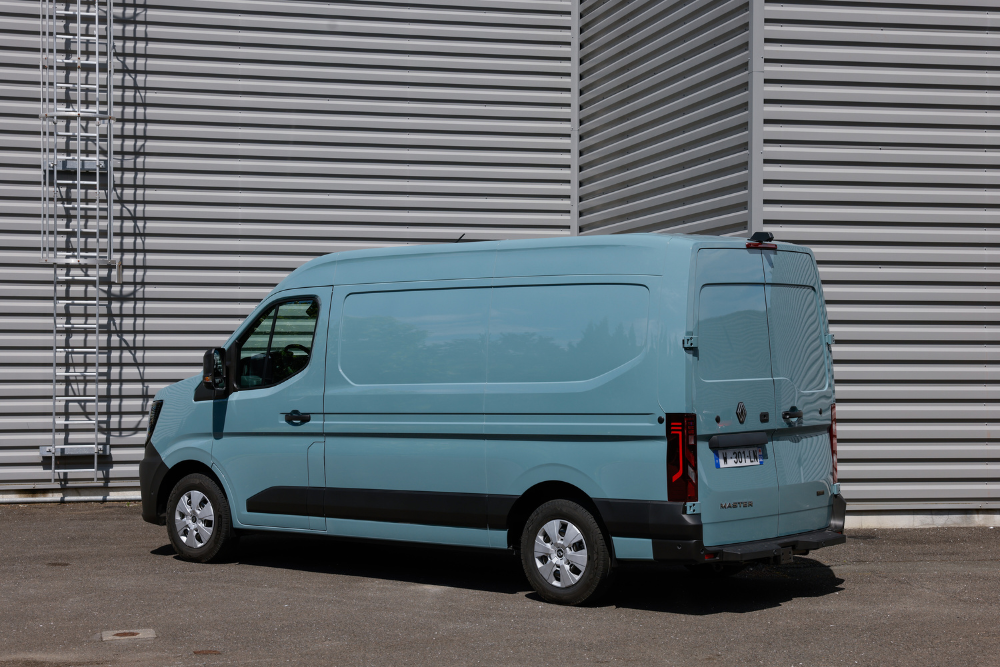
Few vans, if any, are bigger than the Renault Master. It’s the largest category of light-commercial vehicle you can get and comes in a variety of body styles, including panel van, large-volume cargo, tipper, flatbed, platform and chassis cab, allowing for 27 different configurations overall. In terms of the regular panel van, two body lengths and pair of roof heights allow for plenty of versatility, while the powertrain choice comes down to a straight battle between diesel propulsion or the fully electric Master E-Tech.
Interior Gallery
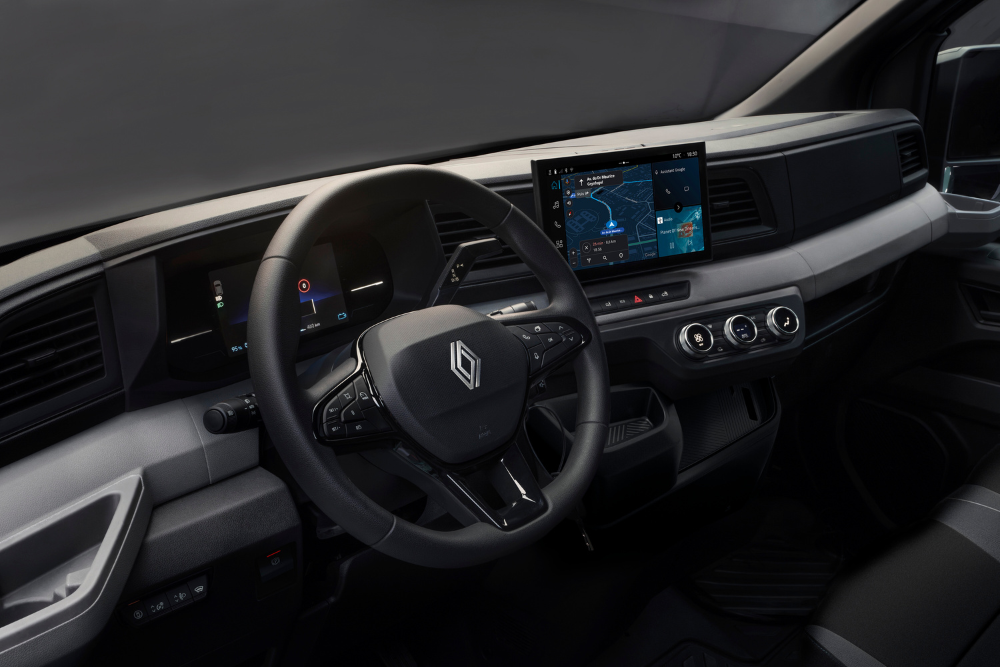
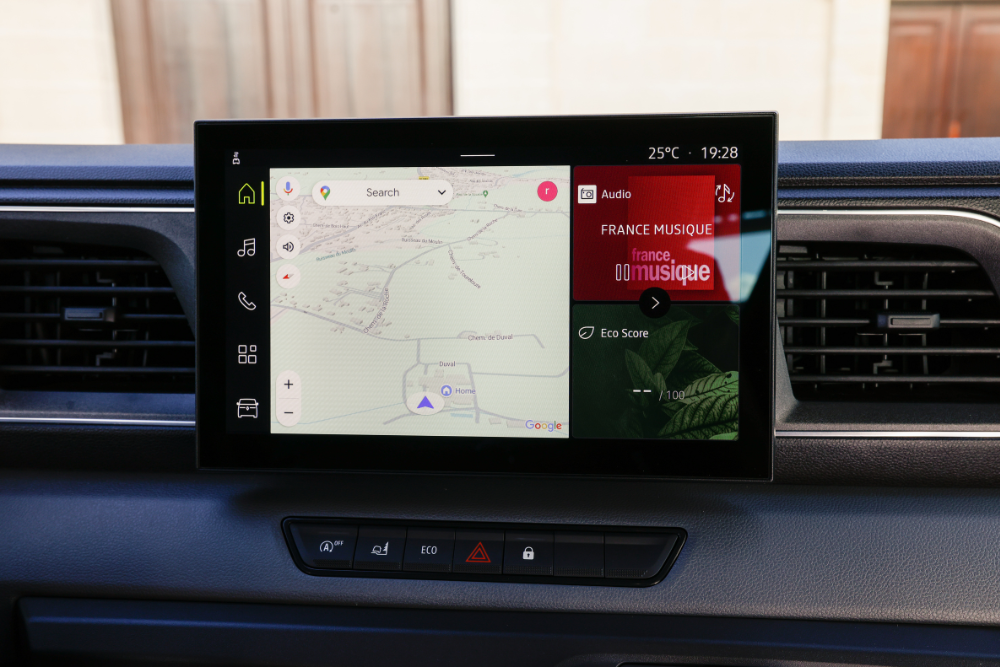
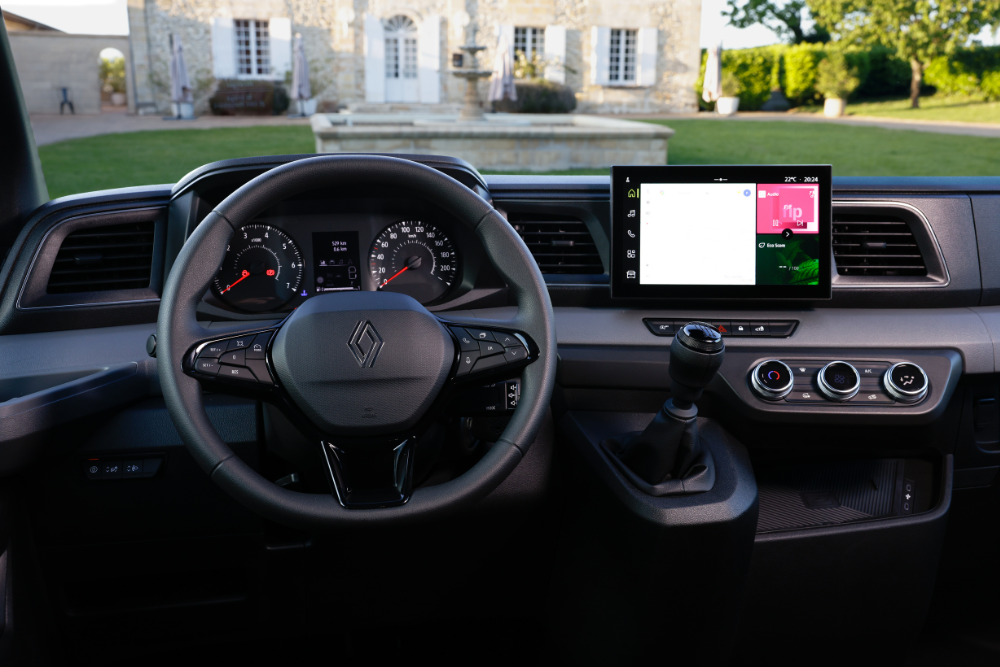
The cab in the Renault Master can feel a little basic compared to that found in some rivals, even going by the standard of plastics in CVs, but there’s a 10-inch OpenR-link infotainment system onboard to ensure a decent standard of technology.
In front of the driver is a simple but effective 3.5-inch digital instrument panel flanked by analogue dials, while a high-mounted gear lever and easy-to-use climate controls are further boons of the Master’s cab.
There are nine main stowage areas up front in the Renault Master, which between them total up to 135 litres of capacity. This includes a 66-litre storage compartment beneath the front passenger seat, as well as a lidded cubby on top of the dashboard.
Perhaps the best feature of the Master’s cab is the ‘fold-down office’, in which the central part of the three-seat bench can be dropped down to reveal a flat work area. It is reserved for the higher Advance grade of the Master, though.
The basic trim level in the Renault Master range is Start, which comes with a 3.5-inch digital driver’s display, front LED lights, automatic lights and wipers, the 10-inch OpenR-link infotainment, a 12-volt socket in the centre console and 8-12 swivelling and recessed rings in the loading area.
Stepping up to the Advance specification adds in 16-inch steel wheels with extended underbody protection, side rails with lashing rings, Google Built-In for the OpenR-link set-up, manual air conditioning, front fog lights, the mobile office folding front bench and a through-load steel bulkhead.
With 20 onboard advanced driver assistance systems and a full five-star safety rating from the commercial-vehicle-testing arm of Euro NCAP, the Renault Master is a very safe van on the market.
There is a fully electric version of the Renault Master, which is called the E-Tech, and it comes with a 140hp electric motor plus 87kWh battery pack for a quoted range of up to 460km. With 130kW DC charging, 10-80 per cent for a top-up of its battery is said to require only 38 minutes.
However, the Master E-Tech is very expensive for what it is (more than €60,000), so we’re focusing on the diesels here.
All use a 2.0-litre turbodiesel four-cylinder engine and, for the panel vans available in our market, they’re all front-wheel drive too. The opener is the 130, with 130hp and 350Nm of torque, all mated exclusively to a six-speed manual gearbox.
For the 150 (150hp/360Nm) and 170 (170hp/380Nm) models, both that six-speed manual and a nine-speed automatic transmission are offered.
As torque is broadly the same across all these variants, expect any Master to drive effectively whether laden or unladen, although we’d suggest the 150hp engine strikes the best balance between performance, affordability and economy.
With reasonable purchase prices (as a Blue dCi, at any rate) and the French company’s clever value-management strategy across its European commercial-vehicle operations, the residuals of the Renault Master are among the strongest on the used-van market.
Renault Commercial Vehicles Ireland also has one of the most-competitive warranties in the industry, with up to five years and 200,000km-worth of cover on its vans like the Master. That distance cap, incidentally, only counts for years three-five of the warranty, with the initial 24 months valid for unlimited kilometres.
Facts & Figures
- Starting Price: €38,950 (diesel), €60,090 (E-Tech)
- Fuel Economy: 7.4-8.0 litres/100km
- Power: 130-170hp
- Payload: up to 1,606kg
- Load volume: up to 14.8m3
- Towing capacity: 2,500kg
- Max load length: up to 3,855mm
- Range: up to 460km (E-Tech)
Latest Reviews
Like what you see?

Connect With Us


Our Mobile App